
Laser Cutting vs Laser Etching: Understanding the Difference in Precision Manufacturing
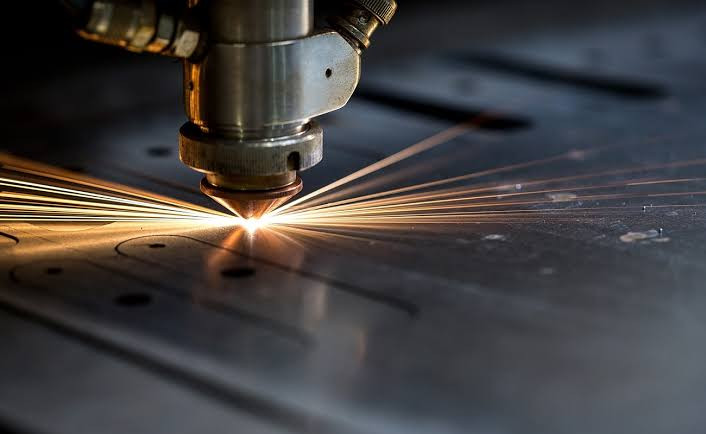
Selecting the correct manufacturing process is fundamental to achieving the required performance, quality and cost of a precision-engineered component. Although laser cutting and laser etching both utilise highly focused laser energy, they perform fundamentally different functions within the manufacturing process.
Understanding where each process adds value enables engineers to optimise component design, improve manufacturability and simplify the production route.
At Micrometric, we have specialised in industrial laser processing for more than 40 years. Our experience extends beyond operating advanced laser systems, we work with customers to solve complex manufacturing challenges, producing precision components that conventional manufacturing methods often struggle to achieve.
Laser Cutting – Manufacturing the Component
Laser cutting is a non-contact thermal process that uses a highly focused laser beam to remove material and produce a finished component. Modern fibre and CO₂ laser systems deliver exceptional positional accuracy, repeatability and edge quality while maintaining minimal heat affected zones.
Unlike conventional punching or machining, laser cutting requires no dedicated tooling, making it particularly suited to prototype development, low-volume manufacture and complex component geometries.
For industries where dimensional accuracy and consistency are critical, laser cutting offers significant advantages in both precision and manufacturing flexibility.
At Micrometric, our laser systems routinely process materials ranging from ultra-thin foils to 20 mm thick metals, manufacturing components in materials including:
- Stainless steels
- Titanium alloys
- Nickel-based superalloys including Inconel
- Aluminium
- Copper and copper alloys
- Brass
- Silver
- Molybdenum
- Tantalum
- Invar
- Mu-metal
- Other specialist engineering alloys
Depending upon material and geometry, tolerances of ±0.02 mm are routinely achieved on precision applications.
More importantly, laser cutting enables the manufacture of components that would be difficult, uneconomic or impossible using conventional manufacturing processes.
Laser Etching – Permanent Identification Without Compromising the Component
Where laser cutting creates the component, laser etching adds permanent information to it.
Laser etching is a controlled surface modification process that produces durable, high-contrast markings without cutting through the material or affecting the structural integrity of the component.
Typical applications include:
- Part identification
- Serial numbers
- Data Matrix and QR codes
- Batch traceability
- Logos and branding
- Calibration markings
- Aerospace and medical identification
Because the process is entirely non-contact and requires no inks, chemicals or consumables, laser etching provides exceptional repeatability while eliminating the durability issues associated with labels or printed markings.
For safety-critical industries such as aerospace, defence and medical devices, permanent traceability is increasingly a regulatory and customer requirement rather than simply a manufacturing preference.
Laser Marking, Laser Etching and Laser Engraving
The terminology surrounding laser marking can often be confusing.
While the terms are frequently used interchangeably, they describe different processes.
|
Process |
Material Removal |
Typical Application |
|
Laser Marking |
No measurable material removal |
Surface colour change, identification |
|
Laser Etching |
Microscopic surface removal |
Permanent industrial identification |
|
Laser Engraving |
Deeper material removal |
Decorative or high-wear markings |
Selecting the correct process depends upon material, environmental conditions, required durability and the level of contrast needed throughout the component’s service life.
The Fundamental Difference
The distinction between laser cutting and laser etching is straightforward.
Laser cutting removes material completely to manufacture a component.
Laser etching modifies only the surface to create permanent identification.
Although both processes utilise precision laser technology, they fulfil entirely different engineering functions.
Why Many Components Require Both Processes
Increasingly, components require both precision manufacture and permanent identification.
A typical aerospace component may be laser cut from titanium or stainless steel before being laser etched with part numbers, serial numbers and Data Matrix codes to satisfy complete lifecycle traceability requirements.
Carrying out both processes within a single manufacturing environment improves process control, reduces handling and eliminates unnecessary subcontract operations.
This integrated approach is particularly valuable where component quality, documentation and repeatability are critical.
Engineering Beyond Laser Processing
One of the most common misconceptions is that successful laser manufacture is determined solely by the capability of the laser itself.
In reality, the greatest value often comes from understanding how laser processing integrates with the wider manufacturing route.
Material selection, fixture design, dimensional stability, inspection strategy, downstream processing and final application all influence the optimum manufacturing solution.
This is where engineering experience becomes more valuable than machine capability alone.
Micrometric routinely supports customers by reviewing component designs, recommending alternative manufacturing methods and identifying opportunities to improve quality, reduce cost or simplify production.
In many cases, relatively small changes to component geometry or manufacturing sequence deliver significant improvements in manufacturability and overall project cost.
Precision Manufacturing Under One Roof
Unlike many subcontract laser cutting companies, Micrometric offers a comprehensive range of complementary manufacturing processes that enable complete component manufacture from a single source.
These include:
- Precision laser cutting
- Laser drilling, including micro-hole drilling
- Laser welding
- Laser marking and etching
- Wire EDM
- CNC machining
- Precision grinding
- Coordinate measurement inspection
- Helium leak testing
- Non-destructive testing
- Approved specialist finishing processes through qualified partners
This breadth of capability enables us to manufacture complete components rather than simply supplying laser-cut profiles.
Choosing the Right Process
If the objective is to manufacture a precision component, laser cutting is the appropriate process.
If the requirement is permanent identification or full component traceability, laser etching provides the solution.
For many high-value engineering applications, both processes are used together to deliver a fully finished, production-ready component.
The correct choice depends not only on the drawing, but on the component’s application, manufacturing route and performance requirements.
Working With Micrometric
For more than four decades, Micrometric has supported customers operating at the highest levels of engineering precision across aerospace, defence, motorsport, medical, energy and advanced manufacturing.
Our expertise extends well beyond laser processing.
We work collaboratively with customers to develop practical manufacturing solutions, particularly where components present challenges in material selection, dimensional accuracy, manufacturability or process capability.
Whether supporting prototype development, production manufacture or complex engineering projects, our objective remains the same: to manufacture components that consistently meet the highest standards of precision, quality and reliability.
If your project demands more than simply laser cutting, our engineering team would welcome the opportunity to discuss how Micrometric can help deliver the optimum manufacturing solution.
Other news posts
Precision Where It Matters: How Micrometric Supports the Aerospace Supply Chain with Advanced Laser Manufacturing

In aerospace manufacturing, precision is not a differentiator, it is a prerequisite. Components must perform flawlessly in extreme environments, meet rigorous regulatory standards and be delivered with absolute consistency.
Shooting Star’s Annual Chippy Quiz Raises Over £1,800 for Charity
For the fourth-year running, we were delighted to be the headline sponsor of Shooting Star’s 11th annual Chippy Quiz, at The Elite Fish & Chip Company on Tritton Road, Lincoln.
Precision Manufacturing: Wire Erosion and Laser Welding for High-Accuracy Components
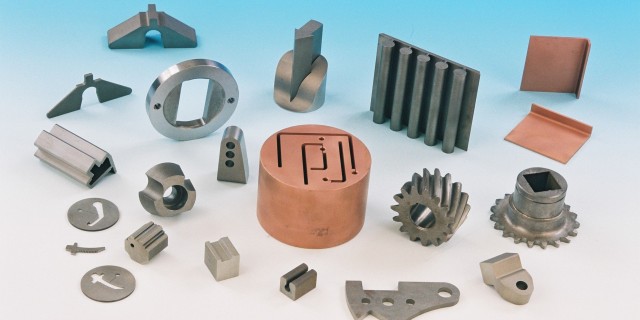
At Micrometric, we specialise in precision engineering techniques that deliver exceptional accuracy and quality for complex components.